Table of contents
What Is Vietnamese Crab Noodle Soup (Bún Riêu)?
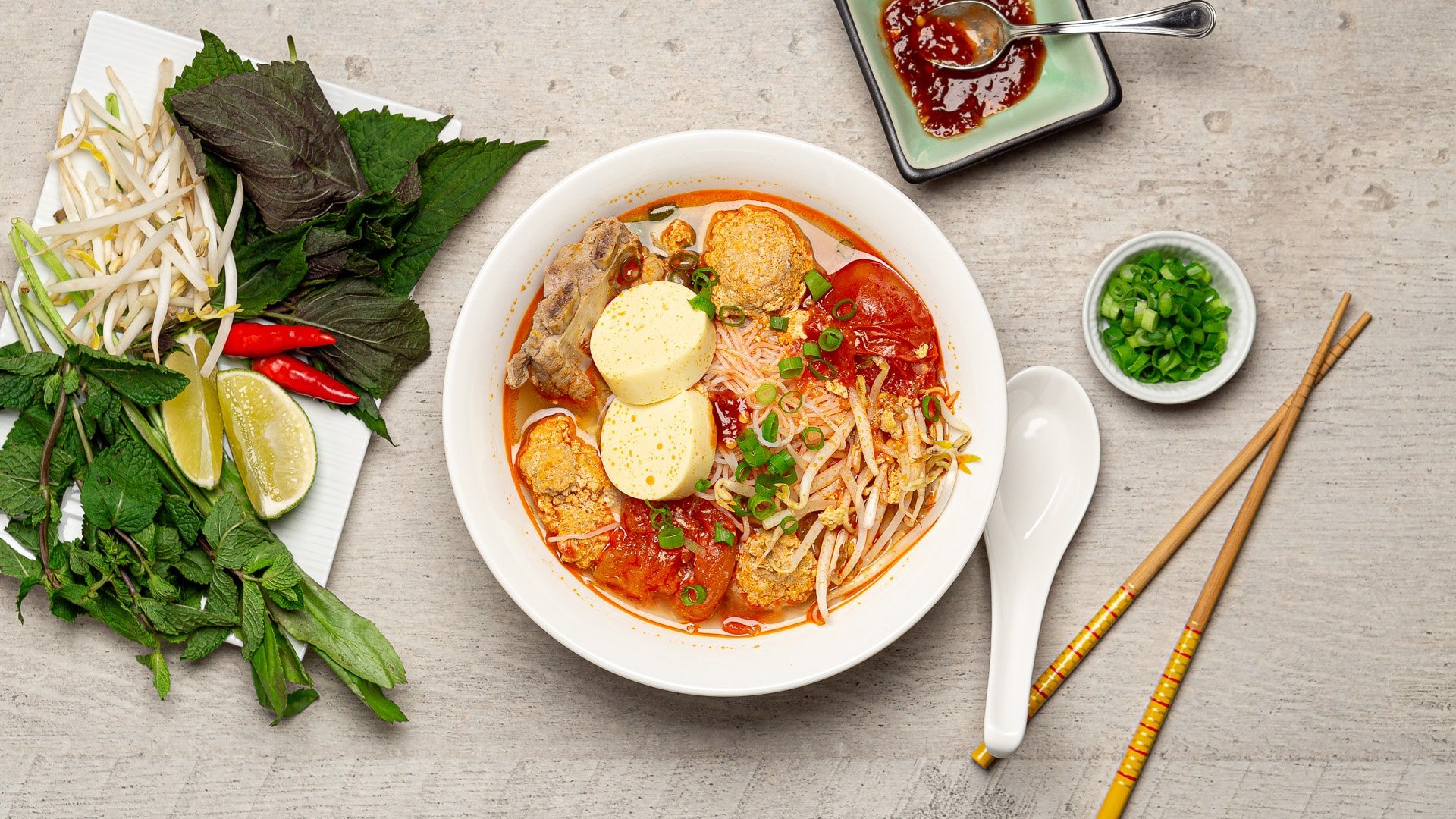
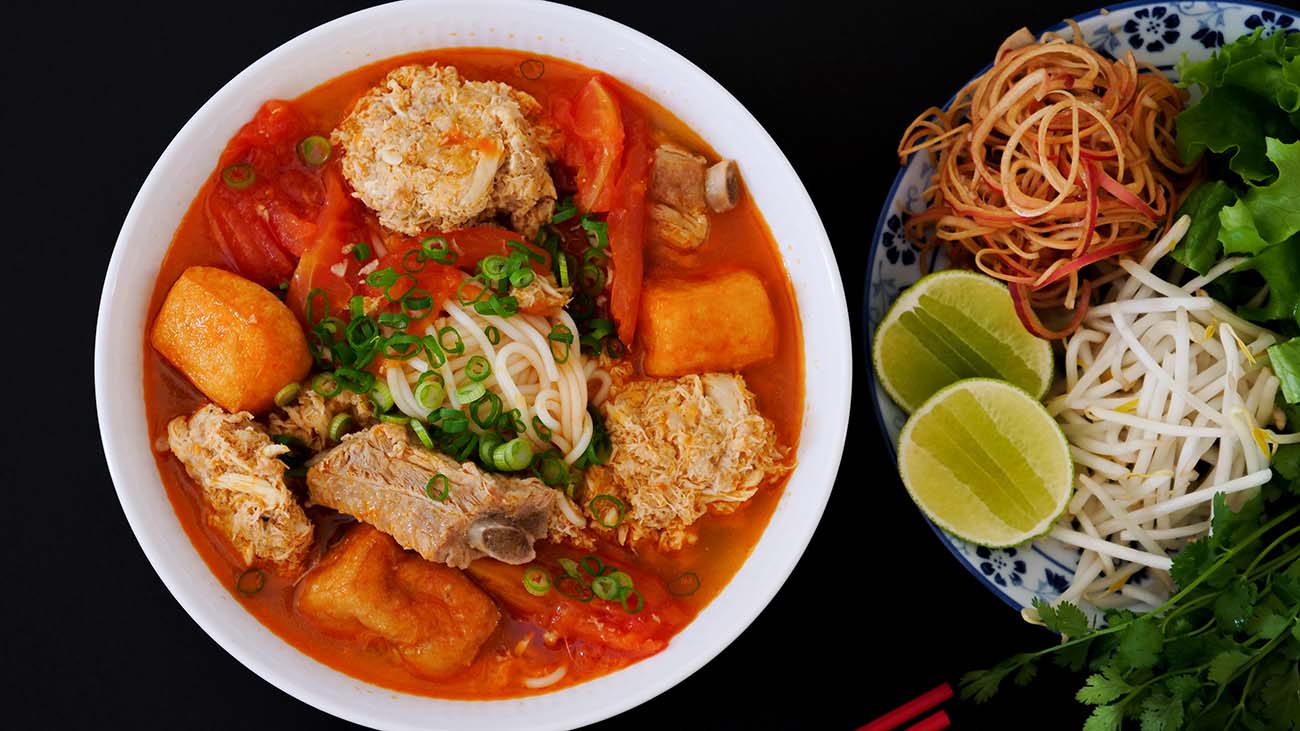
Vietnamese crab noodle soup, known locally as Bún Riêu, is one of Vietnam’s most iconic comfort foods. Loved both in Vietnam and abroad, this dish is known for its light yet deeply flavorful broth, combining freshwater crab, tomatoes, and a subtle tangy kick.
Unlike heavy soups, Bún Riêu is refreshing and slightly sour, making it especially popular during hot summer days.
What Makes Bún Riêu Unique?
At its core, this dish features:
- Rice vermicelli noodles (bún)
- Freshwater crab paste (riêu cua)
- Tomato-based broth with a mild sour taste
- Shrimp paste (optional, for extra umami)
- Fresh herbs and raw vegetables on the side
The combination creates a balance of savory, tangy, and slightly sweet flavors, with a clean finish that keeps you coming back for more.
For more dishes like this, explore our Vietnamese food guide.
Key Ingredients You’ll Need
To prepare an authentic bowl of Vietnamese crab noodle soup for about 4–5 servings:
- 2.2 lbs (1 kg) fresh field crabs
- Tomatoes
- Tamarind (or vinegar for acidity)
- Fish sauce
- Fried shallots
- Scallions
- Cooking oil (or annatto oil for color)
- Rice vermicelli noodles
- Optional: shrimp paste for deeper flavor
Pro tip: Female crabs are preferred because they tend to have firmer, sweeter meat.
How to Prepare Crab Paste (Riêu Cua)
- Clean the crabs thoroughly
Soak and rinse to remove all mud and impurities. - Break and grind the crabs
Remove shells and inedible parts, then grind the crab meat into a smooth paste. - Extract the crab broth
Mix the ground crab with water, strain out solids, and keep the liquid. - Cook the broth
Simmer gently—crab protein will naturally form into soft clusters (riêu).
Building the Flavorful Broth
- Sauté tomatoes until soft and slightly caramelized
- Add tamarind or vinegar for a light sour taste
- Season with fish sauce and a pinch of salt
- Optional: add a small amount of shrimp paste for richness
As the soup simmers, the crab paste will float and form delicate chunks, giving the soup its signature texture.
Preparing Crab “Bricks” (Optional but Delicious)
Crab fat (often called “crab bricks”) can be sautéed with:
- Fried shallots
- Annatto oil (for color)
This creates a rich, aromatic topping that enhances both flavor and presentation.
How to Serve Bún Riêu
To assemble your bowl:
- Add cooked rice vermicelli noodles
- Pour over the hot crab broth
- Top with crab paste, tomatoes, and scallions
- Serve with fresh herbs and raw vegetables on the side
Common sides include lettuce, banana blossom, bean sprouts, and herbs.
Why Americans Love Bún Riêu
- Light and not greasy
- Naturally gluten-free (with rice noodles)
- Packed with fresh, whole ingredients
- Perfect balance of tangy and savory
It’s a great alternative if you enjoy dishes like pho but want something brighter and more refreshing.
Final Thoughts
Vietnamese crab noodle soup (Bún Riêu) is more than just a dish—it’s a perfect example of Vietnam’s balance-driven cuisine. Whether you’re exploring new international flavors or looking for a light, satisfying meal, this dish deserves a spot on your list.
This post may contain affiliate links. We may earn a commission at no extra cost to you.
Table of contents
Latest Articles
 Sapa Vietnam Hidden Gem: The Ultimate Guide to Exploring Hau Thao Commune
 5 Reasons Muong Hoa Mountain Train Is Sapa’s Best Vintage Journey
 Sapa Vietnam in December: 4 Winter Experiences Beyond the Snow
 Cuc Phuong National Park near Tam Coc Ninh Binh: The Amazing Eco-Maze Guide
 Tam Coc Ninh Binh Lotus Season: 3 Reasons You Must Visit in Summer